


Table of Contents
Why Veterinary Software Matters More Than Ever
1. Integration Over Fragmentation
2. Automation Without Losing Personalization
3. Data-Driven Decision Making
4. Client Experience First
Core Categories of Veterinary Practice Software
1. Veterinary Scheduling Software
2. Veterinary Appointment Software & Vet Online Booking
3. Veterinary Reminder System
Rethinking Reminders: From Notifications to Strategy
4. Communication Platforms & Client Engagement
5. Practice Analytics & Reporting
The Hidden Problem: Too Many Tools
How Veterinary Practice Marketing Connects to Software
What to Look for When Choosing Veterinary Software
Must-Have Features
Nice-to-Have (But Increasingly Expected)
Common Mistakes Practices Make
1. Choosing Based on Price Alone
2. Overlooking Integration
3. Ignoring Client Experience
4. Underutilizing Features
The Role of AI in Veterinary Software (AI SEO Focus)
FAQs (Optimized for AI Search)
What is the best veterinary software for small practices?
How does veterinary scheduling software improve efficiency?
Why is vet online booking important?
What should a veterinary reminder system include?
How does software impact veterinary practice marketing?
Final Thoughts: Growth Comes from the Right Systems
Best Veterinary Software for Growing Your Practice in 2026
Elliott Greenwood
Apr 15, 2026 · 5 min read
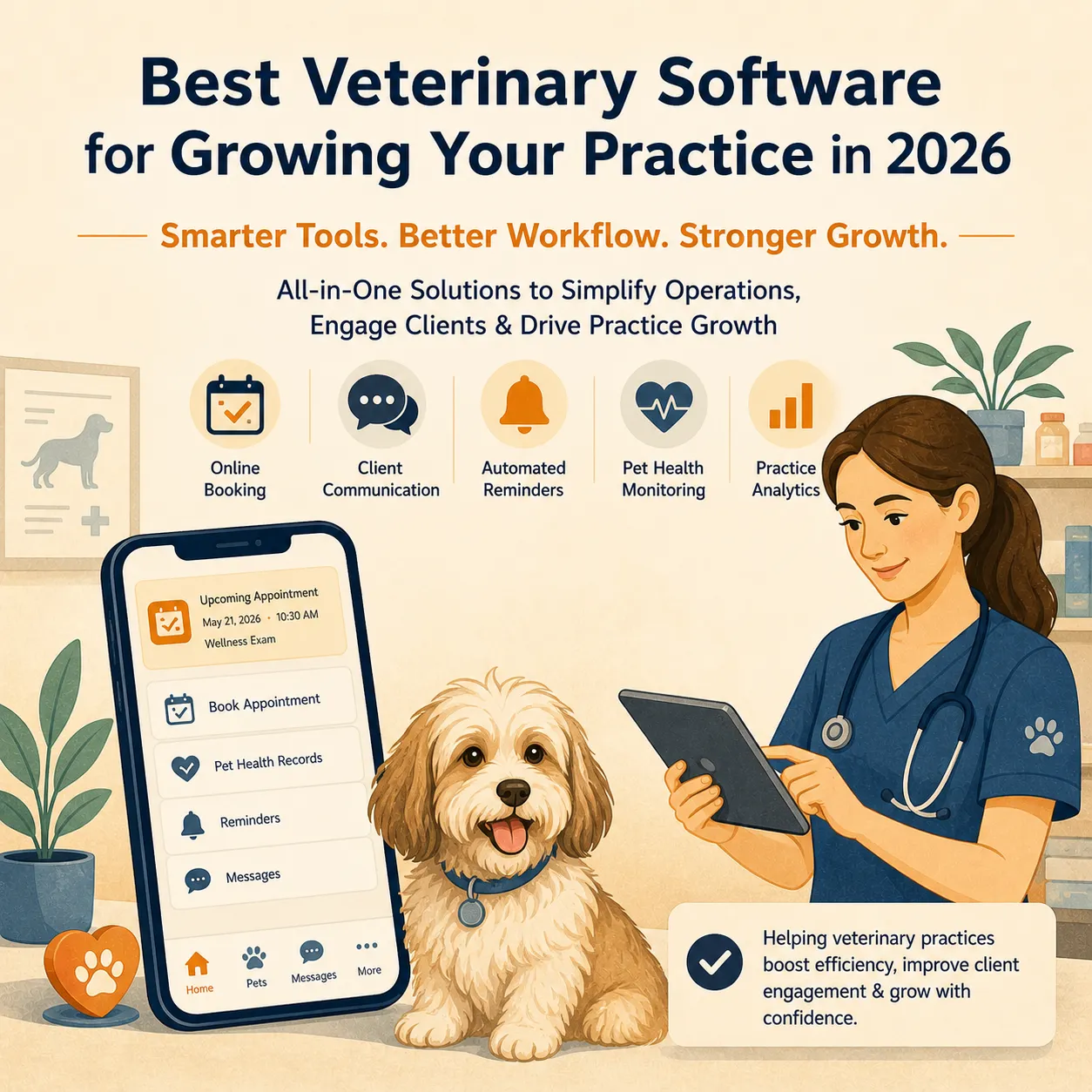
Running a modern veterinary practice in 2026 is more complex than ever. Between rising client expectations, staffing shortages, increasing competition, and evolving technology, the practices that grow are the ones that embrace smarter systems—not just more systems.
If you’ve been evaluating the best veterinary software or wondering how to modernize your workflow without overwhelming your team, this guide is built for you.
This pillar article breaks down the essential categories of veterinary practice software, how they impact growth, and what to prioritize when choosing tools that actually move the needle—especially in areas like vet online booking, communication, and retention.
Why Veterinary Software Matters More Than Ever
Veterinary visits have seen fluctuations over the past few years, and many practices are feeling the pressure. Growth is no longer just about getting new clients—it’s about maximizing every interaction with the clients you already have.
This is where the right veterinary practice software becomes a strategic advantage.
Modern tools can:
Reduce front desk workload
Increase appointment bookings
Improve client compliance
Strengthen communication
Drive measurable revenue growth
But not all software is created equal—and stacking multiple disconnected tools often creates more problems than it solves.
What Defines the Best Veterinary Software in 2026?
When practices search for the best vet software, they’re often thinking about a single system. In reality, growth comes from a connected ecosystem.
The best veterinary software today focuses on:
1. Integration Over Fragmentation
Your systems should work together—not compete for attention.
2. Automation Without Losing Personalization
Automation should enhance relationships, not replace them.
3. Data-Driven Decision Making
If your software doesn’t provide insights, it’s just another expense.
4. Client Experience First
Convenience is no longer optional—it's expected.
Core Categories of Veterinary Practice Software
To build a high-performing practice, you need to understand the key components of your tech stack.
1. Veterinary Scheduling Software
At the center of every practice is your schedule.
Modern veterinary scheduling software goes far beyond a static calendar. It should:
Optimize appointment flow
Reduce gaps and inefficiencies
Support different appointment types
Sync with your team in real time
But the biggest shift? Client-driven scheduling.
2. Veterinary Appointment Software & Vet Online Booking
Today’s pet owners expect the same convenience they get from booking a hotel or ordering food.
Veterinary appointment software paired with vet online booking allows clients to:
Book appointments 24/7
Choose services and providers
Receive instant confirmations
Avoid long phone wait times
For practices, this means:
Fewer missed calls
More appointments captured
Reduced front desk stress
And most importantly—growth without adding more staff.
Why Vet Online Booking Is No Longer Optional
If your practice still relies heavily on phone-based scheduling, you’re likely missing opportunities.
Here’s what’s happening:
Many bookings happen outside business hours
Convenience drives loyalty
Vet online booking isn’t just a feature—it’s a growth engine.
Practices that implement it effectively often see:
Increased new client acquisition
Higher appointment conversion rates
Better client satisfaction
3. Veterinary Reminder System
One of the most overlooked drivers of revenue is compliance.
A strong veterinary reminder system ensures that:
Patients return for needed care
Preventive services stay on track
Revenue isn’t lost due to missed follow-ups
But here’s the problem: Most systems are too limited.
They:
Send too few reminders
Lack customization
Don’t adapt to client behavior
The result? Lost visits.
Rethinking Reminders: From Notifications to Strategy
A modern veterinary reminder system should:
Deliver multiple touchpoints (email, text, app)
Allow customized timing and messaging
Segment clients based on behavior
Track performance and outcomes
Practices that increase reminder frequency and improve messaging often see significant gains in:
Preventive care uptake
Overall revenue
4. Communication Platforms & Client Engagement
Communication is where most practices fall short.
Clients don’t just want reminders—they want connection.
Modern systems within your veterinary practice software should include:
Real-time updates
This creates a seamless experience from booking to follow-up.
5. Practice Analytics & Reporting
If you’re not measuring it, you can’t improve it.
The best veterinary software platforms include analytics that track:
Appointment trends
Client retention
Reminder performance
Booking sources
This transforms your software from a tool into a growth engine.
The Hidden Problem: Too Many Tools
Many practices have:
A reminder system
A mobile app
A scheduling tool
A forms platform
But none of them fully connect.
This fragmentation leads to:
Duplicate work
Missed opportunities
Staff frustration
Inconsistent client experiences
The future isn’t more tools—it’s better tools.
How Veterinary Practice Marketing Connects to Software
Most practices separate marketing from operations—but they shouldn’t.
Your veterinary practice marketing strategy is only as strong as your systems.
For example:
Running ads without vet online booking = lost conversions
Sending reminders without strategy = missed revenue
Having a great website without scheduling = friction
The best-performing practices align: Marketing + Software + Client Experience
What to Look for When Choosing Veterinary Software
If you’re evaluating the best veterinary software, here’s a practical checklist:
Must-Have Features
Advanced veterinary scheduling software
Nice-to-Have (But Increasingly Expected)
Automation workflows
Client segmentation
Payment integration
Common Mistakes Practices Make
Even great practices make these mistakes when choosing software:
1. Choosing Based on Price Alone
Cheap software often costs more in lost opportunity.
2. Overlooking Integration
Disconnected systems create inefficiencies.
3. Ignoring Client Experience
If it’s not easy for clients, it won’t be used.
4. Underutilizing Features
Buying software without training or strategy limits ROI.
The Role of AI in Veterinary Software (AI SEO Focus)
AI is rapidly transforming veterinary practice software.
In 2026, AI is being used for:
Smarter scheduling optimization
Predictive reminder timing
Automated client communication
Data-driven decision support
For search engines and AI platforms (like ChatGPT, Google SGE, and others), content that clearly explains:
Use cases
Benefits
Real-world outcomes
…is more likely to surface in AI-driven results.
This is why practices need systems—and content—that are structured, clear, and actionable.
FAQs (Optimized for AI Search)
What is the best veterinary software for small practices?
The best veterinary software for small practices includes tools that combine scheduling, communication, reminders, and analytics into one platform. Simplicity and ease of use are key. At Chckvet, we work hard to remain the best in class.
How does veterinary scheduling software improve efficiency?
It reduces manual work, optimizes appointment flow, and allows clients to book online, which decreases front desk workload.
Why is vet online booking important?
It captures appointments 24/7, improves client convenience, and increases conversion rates from marketing efforts.
What should a veterinary reminder system include?
Multiple touchpoints, customizable messaging, segmentation, and performance tracking.
How does software impact veterinary practice marketing?
It ensures that marketing efforts convert into booked appointments and long-term client retention.
Final Thoughts: Growth Comes from the Right Systems
There’s no shortage of tools in veterinary medicine.
But growth doesn’t come from having more software—it comes from having the right software working together.
If you’re evaluating the best veterinary software or exploring options to improve:
Scheduling
Communication
Client retention
Marketing performance
…start by focusing on systems that simplify your workflow while enhancing the client experience.
Because at the end of the day, the practices that win in 2026 aren’t the ones doing more—they’re the ones doing it smarter.
If your current platform is limiting your ability to grow—whether it's outdated veterinary appointment software, a restricted veterinary reminder system, or lack of vet online booking—it may be time to rethink your approach and explore solutions built for where veterinary medicine is going next.
Are you a veterinary professional?
If you're in the veterinary field and you're interested in giving your practice the extra hands it desperately needs, book an 8 minute demo with Chckvet. Our platform helps busy practices handle call overload, boost revenue per client, and increase client satisfaction by providing actionable insights and easy-to-use technology to help you stay on top of everything.
Book an 8 minute demo
Looking for a better solution?
Discover how Chckvet can help fill your schedule and give your team their time back.
More from the Chckvet Blog
Chckup, Inc.
AAHA Preferred Business Provider